



Empowering learning that is engaging 3 dimensional student centered NGSS aligned
Go from being the sage on the stage to the guide on the side with NGSS storylines.
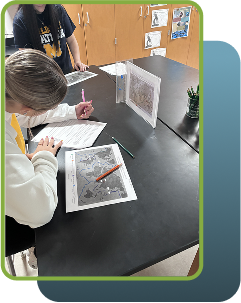
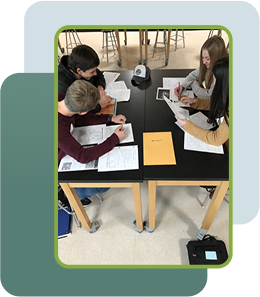
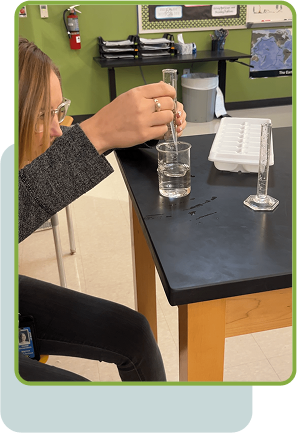
Storylines used in 47 States!
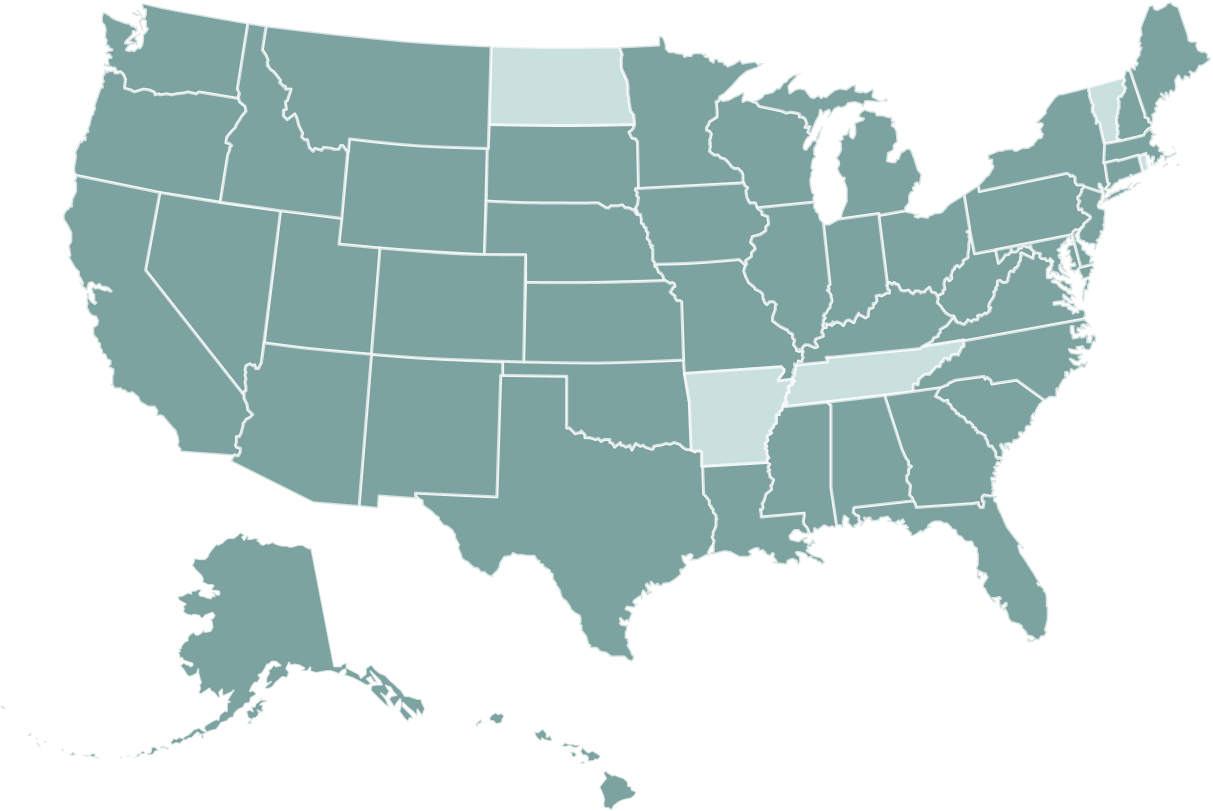
Over 1000 NGSS aligned Earth science storyline units sold!
Presented at Leading Conferences
Offered virtual and in-person professional development
Supported 1000+ teachers!
Trusted & Presented at Leading Conferences





Do your teachers struggle with this too?

Using outdated textbooks
that fail to reflect current scientific discoveries

Relying on supplemental materials
instead of a cohesive curriculum

Burning out
from long hours developing new lessons

Connecting Earth & space science to students' lives
making engagement a challenge
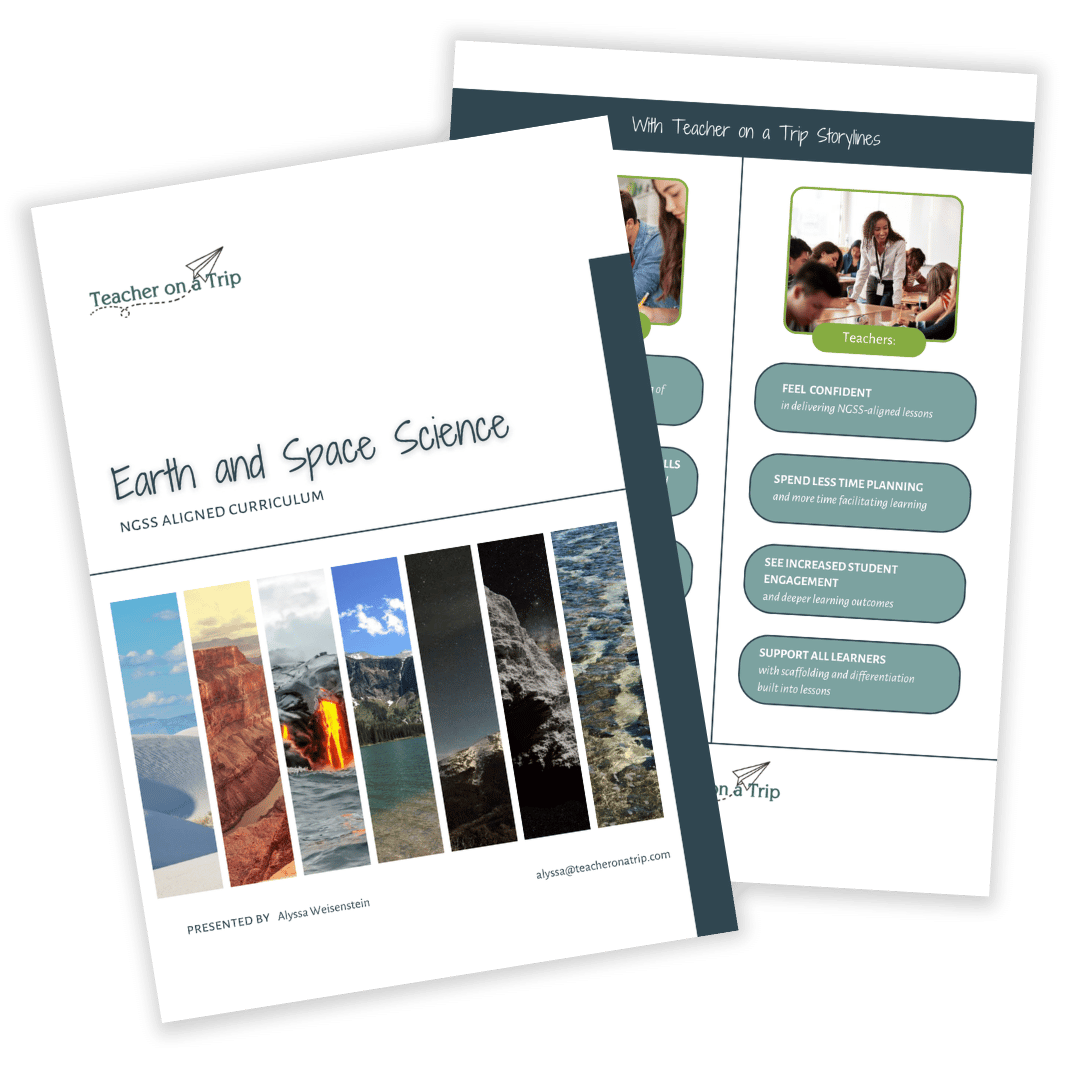
With Teacher on a Trip Storylines

STUDENTS:
- Ask more questions
and develop a deeper understanding of Earth’s systems & the universe
-
Think
critically
about environmental challenges and potential solutions
- Engage in meaningful investigations
that connect science to their own experiences
- Develop problem-solving skills
that prepare them for career & decision-making

TEACHERS:
- Spend less time planning
and more time facilitating learning
-
Feel
confident
in delivering NGSS-aligned lessons
- See increased student engagement
and deeper learning outcomes
- Support all learners
with scaffolding and differentiation built into lessons
AVAILABLE NOW!
Curriculum
Complete Year of Earth and Space Science Curriculum
- HS-ESS2-5: Plan and conduct an investigation of the properties of water and its effect on Earth materials and surface processes.
- HS-ESS3-3: Create a computational simulation to illustrate the relationships among management of natural resources, the stability of human populations, and biodiversity.
- HS-ETS1-1: Analyze a major global challenge to specify qualitative and quantitative criteria and constraints for solutions that account for societal needs and wants.
- HS-ESS3-1: Construct an explanation based on evidence for how the availability of natural resources, occurrence of natural hazards, and changes in climate have influenced human activity.
- HS-ESS3-2: Evaluate competing design solutions for developing, managing, and utilizing energy and mineral resources based on cost-benefit ratios.
- HS-ESS3-4: Evaluate or refine a technological solution that reduces impacts of human activities on natural systems.
- HS-ETS1-3: Evaluate a solution to a complex real-world problem based on prioritized criteria and trade-offs that account for a range of constraints, including cost, safety, reliability, and aesthetics, as well as possible social, cultural, and environmental impacts.
- HS-ESS1-5: Evaluate evidence of the past and current movements of continental and oceanic crust and the theory of plate tectonics to explain the age of crustal rocks.
- HS-ESS2-1: Develop a model to illustrate how Earth’s internal and surface processes operate at different spatial and temporal scales to form continental and ocean-floor features.
- HS-ESS2-3: Develop a model based on evidence of Earth’s interior to describe the cycling of matter by thermal convection.
- HS-ESS3-1: Construct an explanation based on evidence for how the availability of natural resources, occurrence of natural hazards, and changes in climate have influenced human activity.
- HS-ESS2-2: Analyze geoscience data to make the claim that one change to Earth’s surface can create feedbacks that cause changes to other Earth systems.
- HS-ESS2-4: Use a model to describe how variations in the flow of energy into and out of Earth’s system result in changes in climate.
- HS-ESS2-6: Use a quantitative model to describe the cycling of carbon among the hydrosphere, atmosphere, geosphere, and biosphere.
- HS-ESS3-5: Analyze geoscience data and the results from global climate models to make an evidence-based forecast of the current rate of global or regional climate change and associated future impacts to Earth systems.
- HS-ESS3-6: Use a computational representation to illustrate the relationships among Earth systems and how those relationships are being modified due to human activity.
- HS-ESS1-1: Develop a model based on evidence to illustrate the life span of the sun and the role of nuclear fusion in the sun’s core to release energy in the form of radiation.
- HS-ESS1-2: Construct an explanation of the Big Bang theory based on astronomical evidence of light spectra, motion of distant galaxies, and composition of matter in the universe.
- HS-ESS1-3: Communicate scientific ideas about the way stars, over their life cycle, produce elements.
- HS-ESS1-4: Use mathematical or computational representations to predict the motion of orbiting objects in the solar system.
- HS-ESS1-7 (NY): Construct an explanation using evidence to support the claim that the phases of the moon, eclipses, tides and seasons change cyclically.
- HS-ESS3-4: Evaluate or refine a technological solution that reduces impacts of human activities on natural systems.
- HS-ESS1-5: Evaluate evidence of the past and current movements of continental and oceanic crust and the theory of plate tectonics to explain the ages of crustal rocks.
- HS-ESS1-6: Apply scientific reasoning and evidence from ancient Earth materials, meteorites, and other planetary surfaces to construct an account of Earth’s formation and early history.
- HS-ESS2-7: Construct an argument based on evidence about the simultaneous coevolution of Earth’s systems and life on Earth.
COMPLETE NGSS STORYLINE UNITS
What's Included with Each Storyline?
Phenomenon-based lessons designed around the three dimensions of learning.
- Student Worksheets ready-to-go for each lesson
- Lab/Activity notes and paper materials
- Student Research Projects with each storyline
- Teacher Guides with helpful notes
- Answer Keys for student worksheets and assessments
- Supplemental Slides to support student learning
- Assessments formative and summative assessments in 3-dimensions
launching July 1, 2026
Portal Upgrades
- Digital alternatives for every lesson (ideal for absent students and sub days)
- Digital classroom headers for each storyline
- Mini storyline (weather & seasons)
- Vocabulary and big idea trackers across each storyline
- Embedded lab-support videos
- Review station lesson for every storyline
- Bonus lessons for extended learning
- Mini PD videos addressing common 3D classroom challenges
- Live-doc teacher guide with real-time updates
What Teachers are Saying
Cruising through White Sands and loving it!

The kids are having a blast! The Mining Town Poster in White Sands National Park storyline is an engaging assignment.
The Hawaii Volcanoes National Park storyline is great. Love how it brings the information needed to learn into the real world, and easily understandable to the students.
I loved the Hawaii Volcanoes National Park storyline! There were so many different types of activities from labs to videos to investigations to projects. The students were engaged everyday.
I have LOVED the Grand Canyon National Park Storyline unit. It is actually forcing my students to utilize scientific skills and standards.
Frequently Asked Questions
Is this curriculum fully aligned with NGSS?
Yes! Every unit is designed using a three-dimensional approach that integrates disciplinary core ideas, science and engineering practices, and crosscutting concepts.
How does this curriculum support diverse learners?
Teacher on a Trip materials include differentiation strategies, scaffolding options, and digital tools to ensure students can access and engage with the content.
Can I try Teacher on a Trip storylines for free?
Yes! Please schedule a call to access the entire storyline – Grand Canyon National Park Storyline.
How much do Teacher on a Trip storylines cost?
The price of Teacher on a Trip storylines depends on the number of teachers using the curriculum. Storylines are purchased by license per teacher using the curriculum, regardless of number of students. Schedule a call for a personalized quote.
Is professional development available?
Yes! Training sessions and workshops are available to help teachers implement NGSS-aligned instruction effectively.
That’s me, Alyssa!
Teacher on a Trip was founded by Alyssa Weisenstein, an Earth and space science teacher, curriculum creator, and professional development leader.
Alyssa empowers Earth and space science teachers to create and utilize NGSS aligned resources that feature geological phenomena.
By combining real-world geological phenomena found in national parks with high-quality instructional materials, teachers can confidently create classrooms where students think critically and explore the world around them.